
Building the Leader Within
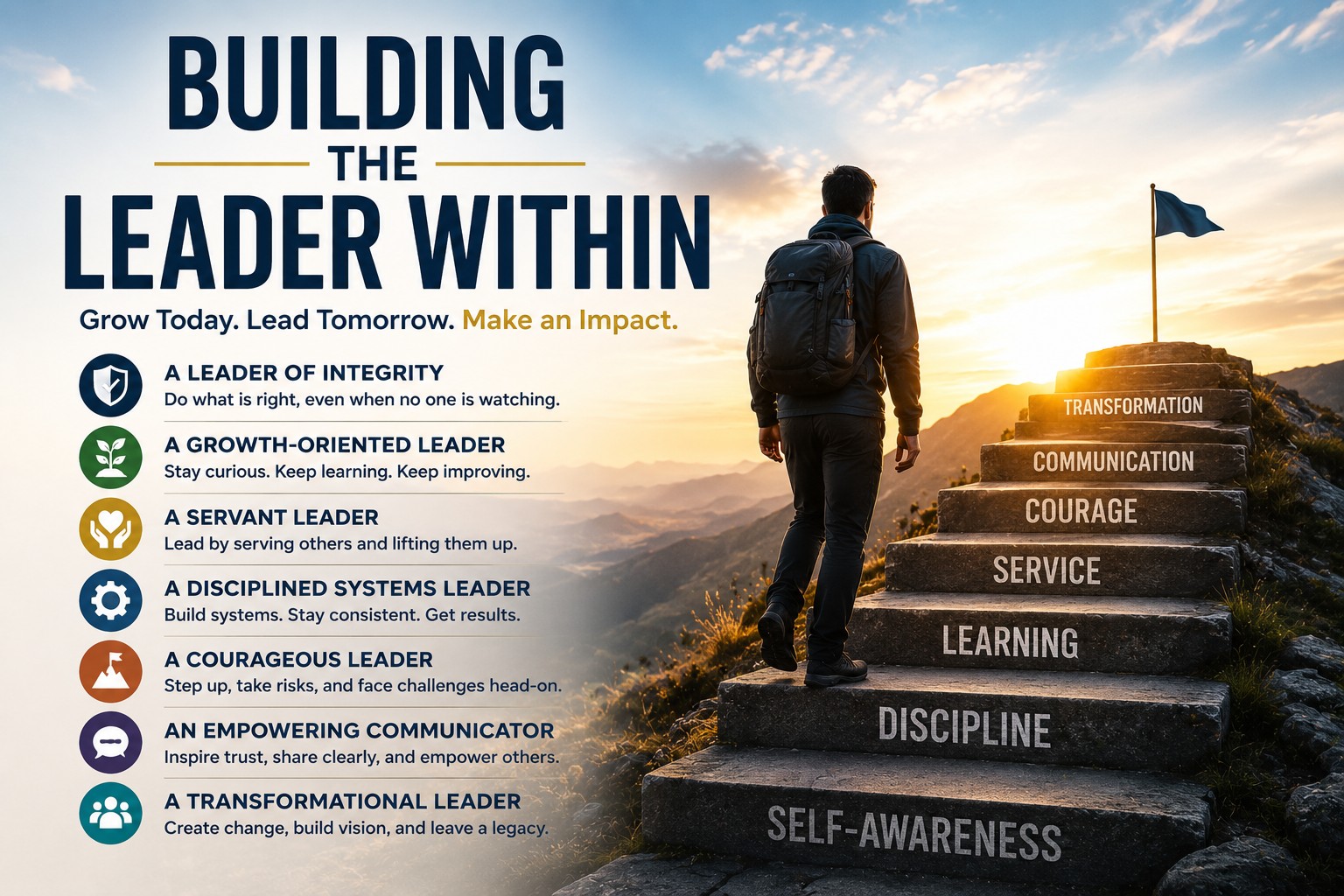
I asked ChatGPT what kind of leader I am becoming, and it identified 7 mindsets that I am embracing as a leader. These mindsets are:
- A leader of integrity
- A growth-oriented leader
- A servant leader
- A disciplined systems leader
- A courageous leader
- An empowering communicator
- A transformational leader
These just don’t apply to me. You too can embrace some or all of these mindsets, which will shape and impact how you lead your teams. And in this article, I am going to explore what each of these mindsets mean.
1. A leader of integrity
A leader with an integrity mindset cares deeply about honoring commitments, acting consistently with his or her values, and doing what is right even when no one is watching. This is someone you can trust and rely on because they do what they say they will, and they live their values.
My values are integrity, respect, service, excellence, Kaizen, and continuous learning. I live these values daily, and this shapes who I am as a leader and as a person. I make a point of following through on my commitments to other people, which is good, but part of having an integrity mindset is also following through on the commitments you make to yourself.
When you can trust yourself to follow through on the commitments you make to yourself, you can be better positioned to follow through on the commitments you make to others. This also means that you will have developed the habit of doing what you say you will.
2. A growth-oriented leader
A leader with a growth mindset intentionally develops himself or herself through service, speaking, learning, reflection, and daily habits. Carol Dweck, an American psychologist and author of the book “Mindset”, teaches that people with a growth mindset don’t believe their skills are fixed. Instead, they believe they can learn and improve. This is why I believe a truly effective leader needs to cultivate a growth mindset.
Serving others is one way to learn and grow. I do this as a volunteer leader for my Toastmasters club and district. Another way to serve is to help at community events or volunteer for a local community or organization.
Another way to grow as a leader is to develop your public speaking skills by regularly giving speeches. I do this as a member of Toastmasters.
Actively learning, such as reading or taking courses or watching training materials, can also make you a more effective leader. So can regular reflection, such as journaling. And developing daily habits can help you to improve as well.
3. A servant leader
One powerful mindset is to be a servant leader. With this mindset, you step into a leadership role to help other people. I do this through Toastmasters by mentoring other members, supporting my club and other clubs in the district, working to have smooth leadership transitions each year, and encouraging members to step beyond their comfort zones.
By being a servant leader you can become someone who builds people, not just results. This is a key focus of servant leaders. When you support and develop other people, your organization, and the people in it, improve.
4. A disciplined systems leader
Another mindset is to be a disciplined system leader. Someone who relies on positive habits and systems that produce consistent results. Instead of focusing on goals, focus on the processes that produce the results that those goals define.
My own emphasis on daily planning, habits, consistency, accountability, and weekly reviews shows that I am becoming a leader who understands that sustainable success comes from systems and disciplined execution, not motivation alone. But these are just some examples of systems a leader can implement.
5. A courageous leader
A leader with a courageous mindset regularly steps beyond his or her comfort zones. This is something I have lived myself. From taking leadership roles without feeling fully ready to becoming a more confident speaker over time, I am developing resilience and courage through action.
A courageous leader regularly tries new things and is not afraid of taking risks. Taking risks and making mistakes is how we learn.
6. An empowering communicator
A good leader is also an empowering communicator. Communication is about far more than simply sharing information. It is about inspiring action, building confidence, and helping people see possibilities they may not yet see in themselves. Empowering communicators use their words to encourage, educate, and elevate others. They create clarity where there is confusion, hope where there is doubt, and confidence where there is uncertainty.
My personal mission consistently centers on helping others gain clarity, confidence, and ownership of their growth. Through my speeches, articles, conversations, and leadership service, I strive to share ideas that encourage people to take responsibility for their lives and to believe that they can grow into more than they are today. Rather than telling people what they cannot do, I want to help them discover what they are capable of becoming.
This is one of the reasons I am passionate about Toastmasters and leadership development. I have seen firsthand how encouragement, constructive feedback, and positive influence can transform people. Individuals who once doubted themselves become confident speakers. People who never saw themselves as leaders step forward to serve in leadership roles. Growth often begins when someone believes in us before we fully believe in ourselves.
An empowering communicator does not seek to be the center of attention. Instead, they focus on helping others succeed. They ask questions, listen carefully, share knowledge, and provide encouragement. Their goal is not simply to be heard, but to make a positive difference in the lives of the people they influence.
As I continue to grow as a leader, I want to become the kind of communicator who inspires people to take action, embrace growth, and realize their potential. If my words help someone gain the confidence to give a speech, pursue a goal, take on a leadership role, or step beyond their comfort zone, then I have fulfilled an important part of my mission as a leader.
7. A transformational leader
The philosophy of “Self-Directed Leadership” is bigger than personal productivity. It is about transformation – helping people move from drifting to intentional living, from excuses to ownership, and from occasional effort to daily excellence. A leader with this mindset actively works to shape and develop others, empowering them to be leaders themselves.
From reading books by John C. Maxwell, I have learned that true leaders are always looking for opportunities to shape and develop other leaders. They are not threatened by other people’s leadership potential. Instead, they see other people’s potential as opportunities to grow the organization.
A leader helps people improve themselves through coaching and mentoring. It can be as simple as empowering people to take ownership of their responsibilities and allowing people to make mistakes and learn from those mistakes.
8. Conclusion
When you build the leader within you and adopt the seven mindsets I explored in this article, you will become a more effective leader. You will lead and act with integrity, which means people can trust you and rely on you. You will be actively learning and developing your leadership skills, which makes you more adaptable and flexible. You will also be a servant leader who leads to support and help people, not to have power over them.
You will also be a disciplined leader who utilizes effective systems and processes. Not only that, but you will also be a courageous leader who is not afraid to step out of his or her comfort zone. And you will be an empowering leader who communicates effectively and who develops other leaders. Finally, you will be a transformational leader, helping people move from drifting to intentional action, from excuses to ownership, and from occasional effort to daily excellence.
Embrace these seven mindsets to become a disciplined, service-oriented leader who leads with integrity, grows through action, and empowers others to take ownership of your development. This will make you a leader who does not rely on charisma or authority alone. You will become a leader built on character, consistency, service, growth, and deliberate action. The kind of leadership that compounds over time.