
Stop Chasing Passion – Start Building Value
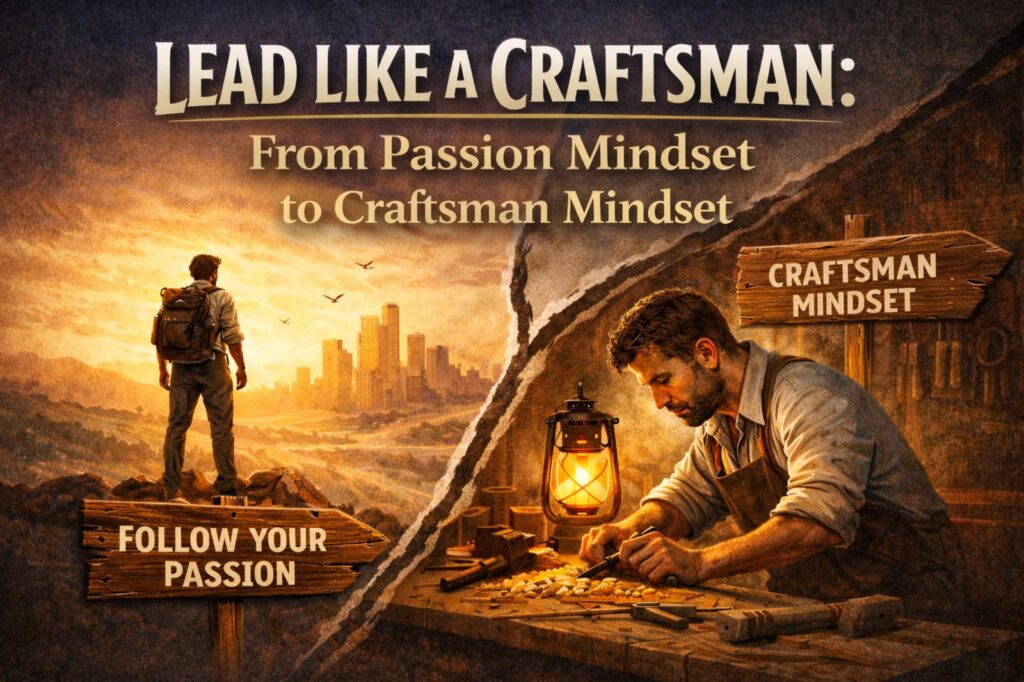
While reading the book “So Good They Can’t Ignore You” by Cal Newport, I came across an idea that challenged the way many people think about careers and passion. Newport argues that instead of adopting what he calls the passion mindset, we should embrace the craftsman mindset.
The passion mindset asks the question, “What can the world offer me?” It focuses on finding work that aligns perfectly with our interests and passions. In contrast, the craftsman mindset asks a very different question: “What can I offer the world?” It shifts our attention toward developing valuable skills and using those skills to create meaningful contributions.
This subtle shift in perspective can have a powerful impact on how we approach our work, our growth, and ultimately our sense of purpose.
Following Your Passion
One area where I feel a strong sense of passion is Toastmasters International. I enjoy volunteering as both a club and district leader. These roles give me something meaningful to do with my time outside of work, allow me to build strong relationships with others, and provide opportunities to give speeches and lead leadership projects.
What makes this even more interesting is that all of this work is done as a volunteer. I give my time, energy, and effort without being paid. Yet I still find it incredibly rewarding.
Naturally, this leads to an interesting question. If I enjoy these activities so much, would it make sense to pursue a career doing the same type of work professionally? At first glance, that might seem like the obvious choice. However, after reflecting on the ideas in Cal Newport’s book, I’m not sure that following my passion in this way is necessarily the smartest path.
Instead, Newport’s idea of the craftsman mindset encourages a different question: Where can I develop valuable skills and use them to create the most value for others? Thinking this way shifts the focus away from simply pursuing what I enjoy and toward building mastery in areas where I can make a meaningful contribution.
What Can You Offer the World?
My professional work is in software development for the cement industry. As an independent contractor, I develop software for a company that provides hardware and software solutions to cement plants and terminals. Over the years, I have developed strong skills in designing and building software systems, and this is a craft I can offer to the world.
If I apply the ideas from Cal Newport’s book, it suggests that my focus should be on continuing to develop this craft. By embracing the craftsman mindset, I can focus on improving my technical skills and mastering the art of building high-quality software applications. The more I refine these skills, the more value I can create for the organizations and people I serve.
I have already spent many years honing my programming abilities. Rather than starting over in a completely new field in pursuit of passion alone, it makes sense to build upon the skills I have already developed and continue strengthening them.
If I were to chase passion and change careers entirely, I would essentially be starting from the beginning again. There would be no guarantee of success in a new field. In contrast, my experience and track record in software development already demonstrate the value I can bring. By continuing to invest in this craft, I can deepen my expertise and expand the impact of the work I do.
Conclusion
Embracing the craftsman mindset, as Cal Newport suggests, means shifting your focus from what the world can offer you to what you can offer the world. It is about committing yourself to continuous improvement, honing your skills, and becoming excellent at what you do so that you can create real value for others.
This approach is very different from the popular advice to simply “follow your passion.” Passion is often seen as something you must discover before choosing a career. But Newport argues – and I agree – that passion is often the result of mastery. As you invest time and effort into developing valuable skills, your sense of purpose and passion naturally grows.
There is certainly a place for passion in our work. However, rather than chasing passion, we are better served by pursuing excellence. When you focus on improving your craft and using your strengths to serve others, passion often follows.
In the end, the path to meaningful work is not found by asking “What can the world offer me?” but by asking a far more powerful question:
“How can I use my skills to create value for others?”
That is the essence of the craftsman mindset – and a powerful foundation for self-directed leadership.